Want smarter marketing? Join our FREE community — built for founders, marketers & creators.
AI Will Replace You If You Don’t Do This One Thing
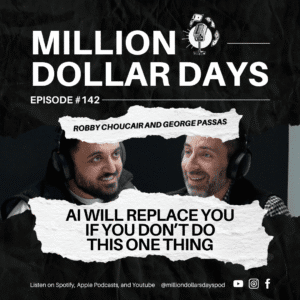
AI adoption is no longer a “future of work” trend, it is a daily advantage you can choose or ignore. We talk about using Claude like a constant business assistant that sits next to Outlook and Chrome, handling everything from drafting emails to structuring reports and summarizing messy information fast. The big lesson is practical: AI productivity only scales when you ask better questions, review outputs, and correct mistakes like you would with a junior team member. When you do, the payoff is real time savings, sharper thinking, and better decision-making, especially for small business owners who wear too many hats.
The conversation also gets blunt about job security and workforce relevance. When a boss asks a team to “dabble” with AI, it is rarely a casual experiment; it is a signal that the business needs leverage, speed, and fewer manual processes. We break down why resisting AI tools like Claude or ChatGPT is the wrong move, and why the better play is becoming the person who finds use cases, documents workflows, and teaches others. The Google Maps analogy makes it click: you already trust software to route you around traffic, so why not use AI to route your work around bottlenecks, admin overload, and slow reporting?
From there we shift into the bigger personal problem underneath the tech: feeling like the world is moving fast while you are not moving fast enough. That tension shows up as second-guessing the path, wondering when to pivot, and asking whether you are “hitting the wrong wall.” We talk about consistency, doing the reps, and the reality that experience cannot be rushed, but also about self-awareness: sometimes the issue is not effort, it is a blind spot, the wrong clients, the wrong team, or a business model that creates constant friction. In construction, that friction can come from regulation, compliance, cash flow pressure, and being heavily dependent on subcontractors, suppliers, and emotional clients.
To bring it home, we connect ambition to clarity and risk. A simple AI prompt, the “magic wand” question, exposes how dangerous a lack of clarity can be: if you cannot name what you want to change, you cannot build a plan to change it. We also challenge the idea of manifesting as magical thinking, reframing it as opportunity awareness powered by action, phone calls, and putting yourself in the right rooms. The episode lands on a practical mantra for entrepreneurs: collaborate, help other people win, and still be willing to roll the dice, take a swing, and learn from what does not work until you find the move that changes everything.