Want smarter marketing? Join our FREE community — built for founders, marketers & creators.
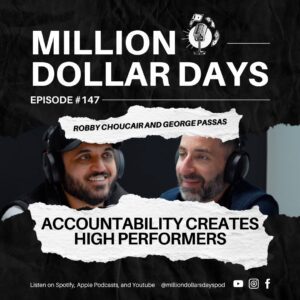
Accountability Creates High Performers
The conversation opens with frustration about leadership, public money, and the feeling that big mistakes rarely come with real consequences. That anger turns into a practical question: if we expect better outcomes from leaders, business owners, and parents, what does “high performance” actually look like day to day? We unpack accountability as a skill, not a slogan, and why incentives matter. When people see poor decisions rewarded, it normalizes average effort. For anyone in the Australian construction industry, small business, or management, the takeaway is clear: build personal standards that don’t depend on politics, headlines, or public approval.
From there we shift to AI in business and why the pace of change is forcing people to pay attention. A surprisingly high webinar attendance rate becomes a signal that fear and curiosity are rising at the same time. The episode draws a useful parallel to early social media: the winners moved before the path was fully paved. The SEO truth here is simple: artificial intelligence tools, automation, and AI workflows are already changing marketing, operations, and productivity. Waiting for perfect clarity costs time. Keeping your finger on the pulse, testing tools, and learning from events can create compounding advantage even if the space still feels messy.
High performance habits show up as consistency, resilience, and the willingness to be uncomfortable. We talk about the boring repetitions that create elite outcomes: publishing every week, showing up to training, and doing the work when motivation is missing. There’s also an important distinction between being a high performer in one lane and being “elite” across the board. That broader definition includes health, wealth, business, mindset, and relationships. The episode argues you don’t need to fix everything at once. Pick one priority that delivers the biggest ROI, then stack habits. This is where coaching, mentors, and simple accountability systems become real strategy, not self-help.
The most personal moment is a parenting wake-up call: seeing yourself in the background of a child’s video and realizing you look exhausted, unhappy, and disconnected. That becomes the catalyst for personal development, better presence at home, and a renewed focus on fitness. We discuss Australian drinking culture, the trap of “I’m busy” as an excuse, and why changing your environment can unlock momentum. Whether it’s hiring a personal trainer, joining a different gym, or committing to daily steps, the point is to design friction and support. The episode closes by reinforcing lifestyle over quick fixes, questioning shortcuts like peptides, and inviting listeners to get into rooms where execution becomes easier through community and structure.