Want smarter marketing? Join our FREE community — built for founders, marketers & creators.

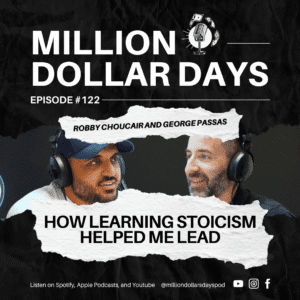
How Learning Stoicism Helped Me Lead
We just came back from three days on the Central Coast where our vitality training forced a full reset. Not the beaches or the cafes—the mindset. We left the day-to-day grind to face the truth most owners avoid: there is only one life. You are not two people with separate rules for home and work. When you split yourself, you leak energy and drift into Groundhog Day. The retreat aimed to stitch life back together by looking at leadership, health, and habits through one lens: how do you show up across everything? That single question cut through excuses and set up a deeper exploration of emotional control.
Stoicism anchored the work. Not cold detachment, but a practical gap between stimulus and response. We taught a simple loop: trigger, pause, assess, act. The alternative—trigger, react, consequence—fuels road rage, bad coaching, and scorched relationships. Real stories made it land: a car cuts you off; you erupt. Add context—a child choking in the back seat—and your anger vanishes. Same event, different meaning, new feeling. That insight reframed leadership too. When a teammate blames the internet or a vendor blames life, reframing to “what’s in my control?” returns power. We used “above the line” language and responsibility maps to hardwire that habit across teams.
We also pushed on the edge cases: can regulating emotions dull joy? If you flatten the highs to avoid the lows, you trade aliveness for safety. The answer isn’t suppression; it’s behavior control. Feel fully, act wisely. Leaders can set boundaries, deliver consequences, and still hold empathy—especially when context changes. Logic without heart becomes cruelty; heart without logic becomes chaos. We practiced choosing actions by principle, not mood: be clear, be calm, be direct, and decide with both data and compassion.
Memento mori, remember you must die, became our loudest whisper. Holding that coin in your pocket is a jolt to choose: ship the work, say the thing, take the risk, forgive the grudge. On the flip, memento vivere: remember to live. That balance rejects both YOLO and endless deferral. It’s training, investing, and building capacity while also taking the trip, playing the game, and being there for family. If everything you own will pass to dust or to others, what remains is who you became and how you served. That perspective dissolves petty triggers and sharpens what matters now.
We closed by asking a thought experiment: would you put your life back in a deck of eight billion and redraw? Almost no one would. That means your card is lucky. Use it. As a builder, owner, parent, friend—live the integrated life. Build teams that own outcomes, coach with clarity, and stop rewarding blame. On the road, in the office, at home—slow the first reaction, widen the context, and then act on values. The practice is simple, the reps are daily, and the payoff is agency. Pause. Breathe. Choose. Then go live before time makes the choice for you.