Want smarter marketing? Join our FREE community — built for founders, marketers & creators.
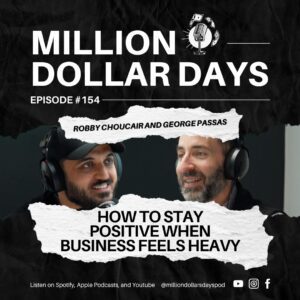
How To Stay Positive When Business Feels Heavy
AI is moving so fast that even the people building it are waving red flags. We talk about the CEO of Anthropic and the growing call for AI regulation, not as a sci-fi plot, but as a real concern about misalignment, safety, and what happens when powerful systems scale faster than our ability to control them. For business owners, marketers, and operators, the tension is obvious: AI productivity tools like Claude and ChatGPT can compress hours of work into minutes, yet the same acceleration raises questions about risk, incentives, and whether companies will truly slow down when competition rewards speed.
From the ground level, AI in business is already changing how teams communicate and execute. We dig into the difference between leveraging AI like a power tool versus using it as a crutch that trains laziness. Voice-to-text workflows, AI agents, and auto-drafted emails can remove friction, but they can also create a weird loop where AI writes a message, another AI summarizes it, and nobody is actually thinking. That matters for leadership and culture: if you outsource your clarity, your decisions get softer. The goal is to use AI to increase output and accuracy while keeping ownership of the message, the intent, and the final call.
The conversation then shifts to a tougher reality: when the market feels quiet, projects drag, and the “everything is hard” fog sets in, mindset becomes part of your business strategy. We unpack the red car theory as a practical lens for entrepreneurship and mental health. What you look for is what you find, and if your days are filled with problems, you start collecting more proof that everything is broken. The way out is not fake positivity. It is a conscious effort to notice progress, create momentum, and stop feeding the story that you are stuck, especially in industries like construction where delays, mistakes, and unreliable trades can stack up fast.
One of the strongest tools we share is stacking little wins on purpose. It sounds simple, but it is real performance psychology: you train your subconscious through repeated evidence that you are moving forward. A “no parking ticket” moment becomes a reminder that today is not out to get you. A completed task becomes a tick that restores control. Over time, those small wins create resilience because they keep your enthusiasm alive when motivation is low. For small business owners and founders, this is how you keep showing up during hard quarters without burning out or spiraling.
Finally, we get blunt about money, fear, and support systems. If your emotional state is tied to your bank account, every dip feels like personal failure. We challenge that by treating money as a tool, not an identity, and by normalizing the truth that many successful people go broke more than once and rebuild smarter. When the stressful email arrives or the legal threat shows up, your circle matters. Having people who calmly say “we’ll figure it out” can reset your nervous system and get you back into action. The takeaway is practical: talk to your people, find your blind spots, have the hard conversation early, and keep moving toward the life you actually want.